
CELEBRITY
Finally, Taylor Swift’s persona is crumbling. This is her annus horribilis… and here’s what Vanity Fair didn’t even have the guts to write: MAUREEN CALLAHAN

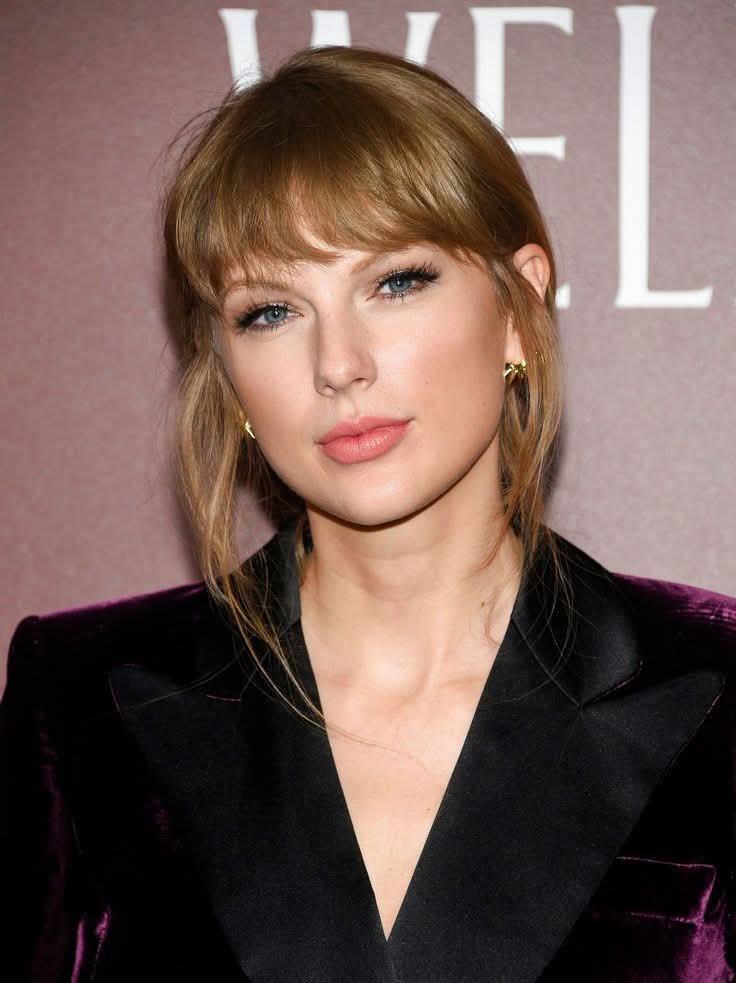
Finally, Taylor Swift’s Persona Is Crumbling: Is This Her Annus Horribilis?
An opinion-style commentary examining the growing criticism surrounding Taylor Swift, the pressures of celebrity culture, and the gap between a carefully managed public image and public perception.
For years, Taylor Swift appeared almost untouchable. She was more than a pop superstar; she was a cultural phenomenon, a business empire, and, to millions of devoted fans, a symbol of resilience, independence, and female empowerment. Every album release became an event, every relationship generated headlines, and every public appearance seemed to reinforce the image of a woman who had mastered the art of controlling her own narrative.
But even the most carefully constructed public image can face difficult questions. And when success reaches extraordinary heights, scrutiny often becomes equally intense.
The phrase annus horribilis, meaning a terrible or disastrous year, is particularly striking when applied to a celebrity whose career has been defined by commercial triumphs. It raises an uncomfortable question: what happens when the public begins questioning not the talent, but the persona surrounding it?
### The Vanity Fair controversy: A different side of the superstar
The controversy intensified following the publication of The Mastermind, a Vanity Fair feature by journalist May Jeong. The article reportedly drew on interviews with more than 100 people connected to Swift’s life and career, revisiting stories about her childhood, relationships, professional ambitions, and interactions with people around her. AOL +1
What made the feature particularly controversial was its attempt to contrast Swift’s familiar public image with accounts from people who had encountered her at different stages of her life.
The article’s unusual approach, including its decision not to name Swift directly throughout much of the piece, generated considerable discussion. Some readers viewed it as an overdue examination of celebrity image-making. Others questioned the reliability and fairness of anonymous recollections, particularly when they concerned events from years earlier.
And that distinction matters.
A journalist can interview 100 people and still leave readers wondering how representative those accounts really are. A large number of interviews does not automatically make every allegation established fact.
Nevertheless, the controversy has reopened a conversation about the difference between a celebrity’s carefully presented public identity and the private person audiences rarely get to see.
### The problem with being America’s sweetheart
Swift’s public image has long been closely associated with vulnerability, friendship, romantic disappointment, perseverance, and standing up against people who have wronged her.
These themes have helped make her music relatable to millions. Her ability to transform personal experiences into commercially successful songs is one of the defining features of her career.
But there is a complication when a public figure becomes so closely associated with being the victim in every conflict.
Eventually, audiences begin asking questions.
Can a person be wronged in one situation and still be responsible for hurting someone else in another? Can a woman champion female empowerment while making decisions that attract criticism from other women? Can someone demand compassion for their own experiences while refusing to accept that others might have a different perspective?
These are legitimate questions, and they should not automatically be dismissed as jealousy or hostility.
At the same time, criticism should be based on credible evidence rather than an assumption that a successful woman must secretly be unpleasant.
The challenge for Swift is that the more powerful her public image becomes, the more closely people examine whether her actions appear consistent with it.
### The Blake Lively connection and the power of private messages
Another issue attracting attention is Swift’s friendship with actress Blake Lively and the release of private text messages during Lively’s legal dispute with actor Justin Baldoni.
The messages attracted attention because they offered a glimpse into conversations that would ordinarily remain private. Critics interpreted some of the language as inconsistent with the friendly, supportive image Swift has cultivated.
However, private messages must be considered in their full context. Their release does not automatically establish every interpretation circulating online.
Still, the episode raises an interesting question about celebrity friendships: how much of what audiences see is genuine personal affection, and how much is shaped by public relations, professional alliances, and shared commercial interests?
Callahan’s argument is that these controversies are contributing to a broader reassessment of Swift’s image. The Express Gazette +1
### When success becomes a double-edged sword
There is another uncomfortable reality about fame: the higher a celebrity rises, the more difficult it becomes to maintain universal admiration.
Swift has enjoyed extraordinary commercial success. Her music has dominated charts, her concerts have attracted enormous audiences, and her influence extends well beyond entertainment.
But enormous success can create enormous expectations.
Fans who once celebrated everything about their favourite star may begin questioning decisions they previously overlooked. Casual listeners may become more interested in controversies than albums. Even people who admire her musical achievements may find themselves reconsidering the public narrative surrounding her.
Her relationship with Travis Kelce has also placed her under an additional spotlight. Their relationship has become a major subject of entertainment coverage, with public interest extending to their wedding and private lives.
Callahan’s column takes a particularly critical view of the wedding coverage, suggesting that even the celebrations became another source of public backlash. That is an opinion, not proof that the public has collectively turned against Swift. The Express Gazette +1
### Is the public finally changing its mind?
Perhaps the most interesting part of this entire controversy is not whether every criticism is justified. It is why so many people are suddenly interested in questioning a celebrity they previously celebrated.
For years, challenging Swift’s public image could invite immediate criticism from devoted fans. Today, however, the conversation appears more complicated.
Some people believe she has been unfairly protected by an enormous entertainment machine. Others argue that she is experiencing the same scrutiny that accompanies extraordinary fame.
There is also a danger in turning criticism into a campaign to destroy someone’s reputation. A successful woman should not have to be flawless to deserve respect, and making mistakes does not erase years of professional achievement.
Yet being famous does not place anyone beyond accountability.
The most reasonable approach is to distinguish documented events from allegations, anonymous recollections, and personal interpretations.
### The real test of Taylor Swift’s reputation
If this really is Swift’s annus horribilis, the most important question is what happens next.
Will she address the criticism directly? Will she continue allowing her music and public appearances to speak for her? Or will the controversy eventually fade as another chapter in an exceptionally long career?
Her musical achievements remain substantial, and a negative news cycle cannot erase them.
But public trust is different from commercial success. A person can continue selling records, filling stadiums, and attracting millions of listeners while facing uncomfortable questions about their public identity.
That is the challenge facing Swift now.
The Vanity Fair feature has opened a debate that extends beyond one pop star. It raises questions about celebrity branding, friendship, accountability, journalism, and the tendency to confuse a carefully presented public image with the entirety of someone’s character.
And perhaps the biggest lesson is this: nobody should be expected to believe that a celebrity is perfect simply because their public relations team has successfully sold that image.
Taylor Swift deserves to be judged fairly, not worshipped blindly or condemned without evidence.
Ultimately, the question is not whether Taylor Swift is still talented. It is whether the public can separate the music they love from the carefully constructed image they have been encouraged to believe in.
That conversation may prove far more consequential than any single Vanity Fair headline.

1 HOURS AGO! From across the ocean, Prince Harry sent his condolences after Buckingham Palace confirmed crucial news about Princess Kate’s health. The future Queen remained hopeful: “This is only the beginning of my journey — please stand with me.” But in the Great Hall, William broke down, crying out: “Oh my wife…” ✧❖

Breaking news: Few minutes ago,37-year-old Travis Kelce was caught on a steamy getaway with 68-year-old Madonna. Seems like these two might be more than just friends. ,

Finally, Taylor Swift’s persona is crumbling. This is her annus horribilis… and here’s what Vanity Fair didn’t even have the guts to write: MAUREEN CALLAHAN

10 Minutes Ago! Harry ‘Covers His Face’ After Prince Edward Reveals the Paternity Test Results of Him and Lilibet: ‘I Knew It, Her Real Father Turns Out to Be… ●

Kate Middleton’s Family Share Rare Cancer Update After Princess Makes Heartbreaking Confession…….
Obama Barack finally Reveals What’s Going On With Michelle, Leaves Millions Wanting Answers😭💔

HARRY HAS FINALLY HAD ENOUGH OF MEGHAN?!” Prince Harry’s SHOCKING Decision to Take Princess Lilibet Away During a Tense Car-Side Encounter Sends Royal Fans Into a Frenzy! Meghan’s Unexpected Reaction Has Sparked Explosive Speculation, Leaving Everyone Asking ONE UNCOMFORTABLE QUESTION: WHAT IS REALLY HAPPENING BEHIND CLOSED DOORS — AND WHAT IS THE ONE DETAIL THEY DON’T WANT THE WORLD TO NOTICE? 😱💔

Breaking Tragedy Just ! Doctor Exposes the Shocking Truth the Royals Concealed About Princess Catherine’s Condition: “They Made Me Cover It Up…”……For Full Information, Check Link In 👇🏻👇🏻

🔥 SHOCKING MOMENT… JUST 16 MINUTES AGO: CCTV FOOTAGE HAS BEEN RETRIEVED, CAPTURING THE MOMENT TRAVIS KELCE EXPERIENCED AN UNEXPECTED INCIDENT OUTSIDE A PRIVATE KANSAS CITY EVENT, BUT WHAT HAPPENED NEXT LEFT EVERYONE COMPLETELY STUNNED… 😱💔👇 Full story in comments. 👇

Following years of demanding privacy and raising security grievances, Harry’s latest high-profile appearance on This Morning has left the British public thoroughly fatigued. Most notably, his continuous media presence lays bare the unmistakable inconsistency behind…👇👇👇

Just Minutes Ago, Buckingham Palace Releases a Major Tragic Announcement About King Charles, Leaving Queen Camilla, Prince William and Princess Catherine Devastated as the Entire World Are in Disbelief
