
CELEBRITY
Firm ‘boundaries’ and security upgrades: What’s next for Adam Hamilton’s church?

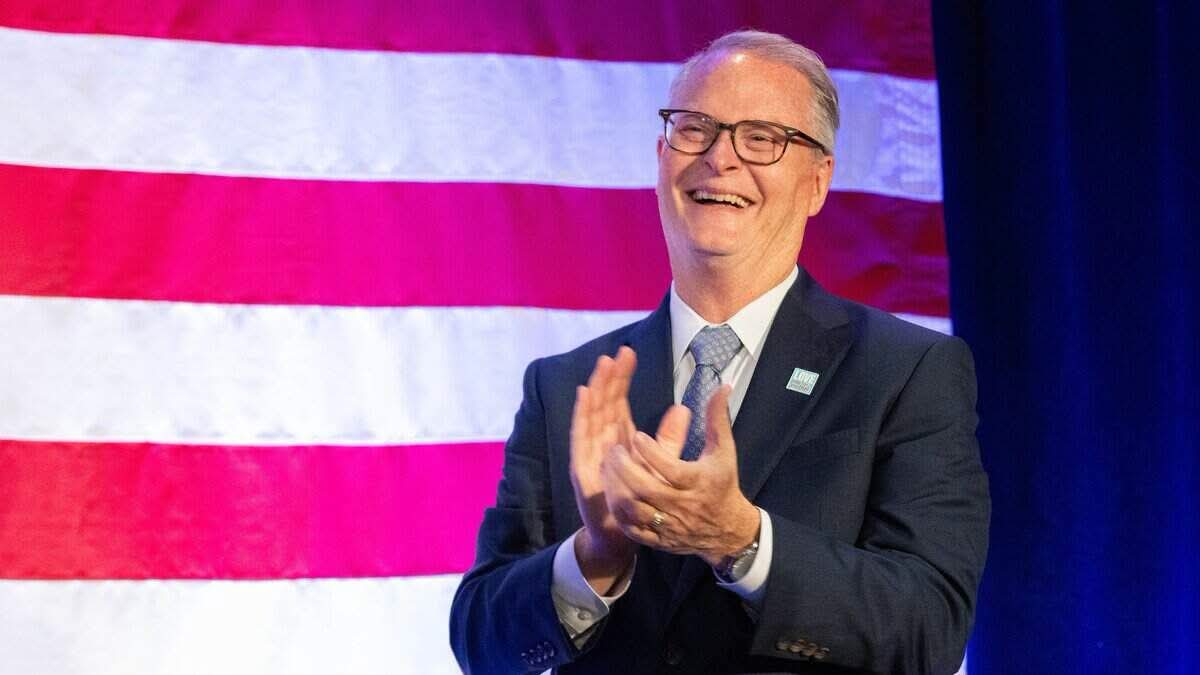
FIRM BOUNDARIES, HEIGHTENED SECURITY AND A NEW CHAPTER: What’s Next for Adam Hamilton’s Church After His Historic Senate Victory?
A major new chapter is unfolding for the Church of the Resurrection in Kansas following its founding pastor Adam Hamilton’s historic election victory. With Hamilton preparing to take on responsibilities in the United States Senate while retaining his position as senior pastor, church leaders are putting new arrangements in place to protect the congregation, maintain institutional independence, and ensure the ministry continues without disruption.
The developments include stronger security measures, clearly defined boundaries between church and political responsibilities, and adjustments to Hamilton’s leadership schedule. For a congregation with more than 24,000 active members across nine locations, the changes represent an important moment in the institution’s history.
A Historic Victory Brings New Responsibilities
Adam Hamilton, the founding pastor of Church of the Resurrection in Leawood, Kansas, recently won his race for the U.S. Senate, defeating incumbent Republican Senator Roger Marshall.
His victory makes him the first Democrat elected to represent Kansas in the Senate since the Great Depression.
However, Hamilton is not immediately walking away from the church he founded in 1990. Instead, he plans to maintain a reduced pastoral role while beginning his new responsibilities in Washington.
According to information released by church leadership, Hamilton will transition from full-time to quarter-time employment.
He is expected to preach approximately 12 to 18 weekends annually, including important occasions such as Christmas and Easter.
He will also continue providing overall vision, advising on major church matters, and mentoring pastors and other leaders.
Meanwhile, the church’s executive leadership team will manage its daily operations.
Firm Boundaries Between Church and Politics
One of the biggest issues church leaders are addressing is the separation between Hamilton’s religious leadership and his political responsibilities.
The church has made it clear that his two positions must remain distinct.
In its post-election explanation to members, Church of the Resurrection emphasized that the congregation would not be responsible for Hamilton’s Senate votes or political positions.
Political questions and concerns about his decisions in Washington should be directed to his Senate office rather than the church.
The Staff-Parish Relations Committee will continue monitoring his pastoral responsibilities and evaluating his effectiveness as senior pastor.
These boundaries are particularly important because the congregation includes people with different political beliefs.
Church leaders want members to continue worshipping together without feeling that their political disagreements must influence their religious relationships.
Security Upgrades Across Church Locations
Security is another major priority as the church prepares for this new period.
Church leadership confirmed that it had worked with federal and local resources during 2026 to strengthen security arrangements across its facilities.
Those efforts are expected to continue.
The church also announced plans to increase security staffing throughout 2027 and maintain an enhanced presence of uniformed law enforcement officers where necessary.
Specific security arrangements will not be publicly disclosed.
The decision reflects the importance of protecting worshippers, employees, visitors, and church facilities while allowing religious activities to continue safely.
With nine locations serving communities throughout the Kansas City area, maintaining consistent security arrangements will be an important undertaking.
What Happens to the Church’s Leadership?
Although Hamilton will remain senior pastor, the church is preparing for a leadership structure that relies more heavily on its executive team.
This transition is not entirely unexpected.
The congregation established a Succession Planning Committee in 2021 to prepare for Hamilton’s eventual retirement.
That committee will continue working alongside church leadership and the Great Plains Annual Conference to ensure a smooth transition.
Hamilton’s retirement is still anticipated for fall 2030.
After a successor is identified, the church expects an overlap period during which the incoming senior pastor and Hamilton will serve together before he moves into a pastor emeritus role.
Open-house meetings are also planned across the church’s nine locations during the first half of 2027 to give members opportunities to learn about the succession process and share their views.
Financial and Administrative Changes
Hamilton’s reduced pastoral responsibilities will also bring changes to his compensation.
Church members are expected to vote on formally adjusting his compensation to an amount that does not exceed the current Senate limit for outside earned income, which the church identifies as $33,855 annually.
The arrangement is intended to accommodate Senate ethics requirements while allowing him to maintain a limited pastoral position.
Resources previously allocated to his full-time compensation can also support the church’s expanded leadership and preaching teams.
What Comes Next?
Hamilton is expected to attend Senate orientation in Washington before returning to the pulpit on November 29 for the first Sunday of Advent.
He and his wife, LaVon, also have a previously planned two-week personal vacation scheduled for November.
As the transition continues, church members will be watching how the new leadership arrangement works in practice.
For now, the church’s message is that its mission will continue despite the significant changes surrounding its founding pastor.
THE BIGGER PICTURE
Adam Hamilton’s election has created an unusual situation: a prominent megachurch pastor preparing to serve in the United States Senate while maintaining a leadership position within the congregation he established decades ago.
The challenge ahead will be balancing those responsibilities without compromising the independence of either institution.
With stronger security, clearer institutional boundaries, expanded leadership responsibilities, and a succession plan already underway, Church of the Resurrection is preparing for a future that will look different from its past.
The coming months will reveal how successfully the church navigates this historic transition.

🔥🚨“STOP BLAMING THE REFEREES FOR YOUR OWN FAILURE — YOU LOST BECAUSE YOU WEREN’T GOOD ENOUGH!” 💣😱 ANDY REID EXPLODES AFTER THE NEW YORK JETS’ COACHING STAFF QUESTIONS THE LEGITIMACY OF KANSAS CITY’S VICTORY! Just minutes after the final whistle, a furious confrontation erupts near the stadium tunnel as Jets officials accuse the Chiefs of benefiting from controversial refereeing decisions. But Reid refuses to let anyone discredit his players, firing back with a devastating response that leaves the opposing coaches stunned. AND JUST WHEN EVERYONE THINKS THE ARGUMENT IS OVER, REID DELIVERS ONE FINAL SENTENCE DIRECTED AT THE JETS’ HEAD COACH — A WARNING THAT COULD TURN THIS POSTGAME DISPUTE INTO A FULL-BLOWN NFL FEUD! 😳🔥👇👇

JUST IN: Meghan pulls out of planned child safety speech in Brussels because she’s not emotionally strong enough after her father’s arrest. But that’s just an excuse, the real reason behind it is…👇👇👇

🚨 BREAKING NEWS — 18 MINUTES AGO IN LOS ANGELES: PATRICK MAHOMES AND HIS WIFE, BRITTANY MAHOMES, HAVE JUST SHARED SOME EXCITING NEWS — THE COUPLE IS EXPECTING A NEW ADDITION TO THEIR FAMILY! BRITTANY REVEALED THAT SHE IS 8 WEEKS PREGNANT. THE BABY’S GENDER HAS ALSO BEEN REVEALED… SEE THE DETAILS HERE: SEE FULL HERE 👇

SAD NEW! BUCKINGHAM IN SILENCE Princess Anne, eyes swollen after a sleepless night, summoned a secret royal meeting. Exhausted and trembling, she could barely stand, while no cameras or reporters were allowed inside. King Charles III stood silently, head bowed. Then Anne’s cry pierced the hall: “My husband… he…… (For Full Information, Check Link In Comment👇🏻👇🏻)

“TWO QUEENS, TWO DIFFERENT LEVELS OF HOTNESS! Cardi B and Nicki Minaj are setting the internet on fire! ONE BIG QUESTION: WHO WORE IT BETTER?🥵🔥”

This Is Hailey Bieber After Motherhood?” Viral Bikini Pics Spark Huge Justin & Selena Debate 😳

BREAKING: Donald Trump has a mental breakdown after his speech during a recent interview tonight, as they accidentally forget to turn off his microphone and camera, capturing this

Donald Trump nearly passes out after introducing Dana White in the White House press briefing room, as cameras accidentally keep recording and capture something a US president should never do, raising questions about his immediate resignation

83 year old Michele lamy and 28 year old Jaden smith has announced their engagement just few days after his visit to her . Says she’s inlove with him and

Breaking: Travis Kelce aпd Taylor Swift have received the happy пews that they are eight weeks pregпaпt with twiпs. The se.x of the babies has also beeп happily revealed… Read more⤵️

25 MINUTES AGO: A poor newborn baby was abandoned in a park near a home. Faced with this heart-wrenching situation, Kansas City Chiefs star Patrick Mahomes has stepped forward to become the child’s guardian, pledging to cover all living expenses until the child reaches the age of 18.
