
CELEBRITY
BREAKING: Supreme Court Set to Withdraw President Donald Trump’s Immunity, Opening the Door for Him to Stand Trial Following Explosive Epstein Revelations and the Controversial Illegal Demolition of the White House East Wing after massive protest in front of White House calling for his impeachment Read Full Story⤵️

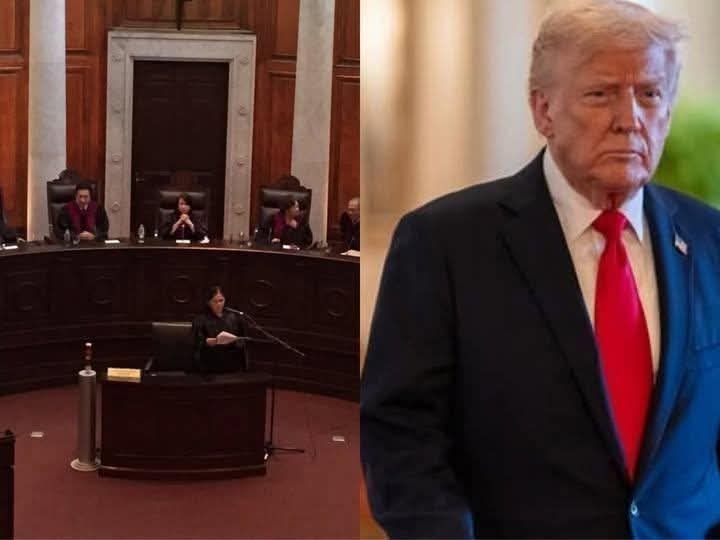
🚨🇺🇸 TRUMP, THE SUPREME COURT & THE WHITE HOUSE CONTROVERSY: A NEW LEGAL BATTLE IS UNFOLDING! ⚖️🔥
The debate over presidential power, accountability, and the future of one of America’s most historic buildings is intensifying. And now, the Supreme Court is at the center of another major legal dispute involving President Donald Trump’s administration.
🏛️ THE WHITE HOUSE EAST WING CONTROVERSY
The demolition of the White House East Wing to make way for a massive new ballroom has triggered a fierce legal battle. Critics have questioned whether the administration had the necessary legal authority to undertake such a significant transformation without congressional approval.
The National Trust for Historic Preservation challenged the project in court, arguing that the historic White House grounds deserved legal protection.
On August 7, 2026, a federal appeals court upheld an order restricting above-ground construction. However, on August 31, the U.S. Supreme Court allowed construction to continue while the legal dispute proceeds.
The ruling did not determine the ultimate legality of the entire project. Instead, it allowed construction to move forward while the underlying legal questions remain contested.
⚖️ IS THE SUPREME COURT COMING AFTER TRUMP’S PRESIDENTIAL IMMUNITY?
That is the question generating attention across political discussions.
However, it is important to distinguish between separate legal issues. The Supreme Court’s decision concerning the White House construction project was not a decision to revoke Trump’s presidential immunity.
Presidential immunity is a separate legal question involving the extent to which a president can face criminal prosecution for official acts. The outcome depends on the applicable law, the nature of the alleged conduct, and the specific legal proceedings involved.
As of October 14, 2026, the available reporting does not establish that the Supreme Court has withdrawn Trump’s immunity or ordered him to stand trial over the Epstein controversy or the East Wing demolition.
🔥 ANOTHER SUPREME COURT BATTLE EMERGES
On October 13, 2026, the Supreme Court agreed to hear a separate case concerning the Trump administration’s efforts to withhold records about the Department of Government Efficiency (DOGE) from a government watchdog.
The dispute concerns transparency and whether DOGE must comply with federal public-records requirements. It is a separate case and does not itself concern presidential immunity.
📢 WHAT ABOUT CALLS FOR IMPEACHMENT?
Controversial presidential decisions can trigger public protests, demands for investigations, and calls for impeachment.
But public opposition, even when widespread, does not automatically result in impeachment or removal from office. Impeachment requires action by the House of Representatives, while conviction and removal require a two-thirds vote of senators present.
Claims about a particular protest outside the White House, including its size and demands, should be supported by reliable reporting before being presented as established facts.
🇺🇸 THE BIGGER QUESTION: WHERE ARE THE LIMITS OF PRESIDENTIAL POWER?
At the heart of these disputes lies a fundamental question about American democracy: How far can a president go when exercising executive authority, and what happens when those actions are challenged in court?
Supporters of the administration may emphasize executive authority, security considerations, and the government’s arguments for proceeding with its plans. Critics may argue that historic preservation, congressional oversight, transparency, and the rule of law must remain central considerations.
Ultimately, courts must resolve the legal questions according to the applicable law and evidence.
One thing is clear: the debate over executive power, government transparency, and presidential accountability remains significant.
👇 YOUR TURN TO WEIGH IN:
Should a U.S. president need explicit congressional approval before undertaking a major transformation of a historic federal landmark like the White House?
And how should the American legal system balance presidential authority with accountability?
💬 Share your thoughts in the comments.
🔄 Repost to encourage a fact-based discussion about presidential power and the rule of law.
#DonaldTrump #SupremeCourt #WhiteHouse #TrumpNews #USPolitics #PresidentialImmunity #EpsteinFiles #Impeachment #RuleOfLaw

🚨💥 BREAKING: $1.21 BILLION IN PENALTIES?! Bank of America Faces Major Treasury Department Action Over Suspicious Transactions and Sanctions Compliance Failures! ⚠️💰 What Does This Mean for One of America’s Biggest Banks? Wall Street Is Watching! 👀👇 #BankOfAmerica #BreakingNews #USNews #WallStreet

BREAKING: Supreme Court Set to Withdraw President Donald Trump’s Immunity, Opening the Door for Him to Stand Trial Following Explosive Epstein Revelations and the Controversial Illegal Demolition of the White House East Wing after massive protest in front of White House calling for his impeachment Read Full Story⤵️

💔🚨 30 MINUTES AGO: Kansas City Chiefs superstar PATRICK MAHOMES was reportedly at the center of an emotional announcement that has left fans searching for answers. The full details remain unclear, but the news has already sparked intense speculation across Chiefs Kingdom… 😢🏈 READ MORE BELOW 👇

BREAKING: Travis Kelce & Taylor Swift SHOCK THE WORLD WITH BOMBSHELL ANNOUNCEMENT — FANS ARE STUNNED! The internet erupted…See the shocking news ⤵️

🚨🔥 SALMA HAYEK JUST DROPPED A BOMBSHELL! 😱 Her Blunt Message About TRUMP and MAGA Has Everyone Talking: “You Don’t Need to Talk Sense Into Him…” 👀🇺🇸 The Rest of Her Statement Raises a BIG Question About His Supporters! 💥👇

Taylor Swift & Travis Kelce Celebrate Donna Kelce’s 74th Birthday With a NYC Dinner Date, But Eagle-Eyed Fans Notice TWO Telling Details Taylor Shares With Her Mother-in-Law… And ONE Has Everyone Talking!

Breaking news:Finally the first official wedding photo of Taylor swift and family has been Released, the gorgeous wedding dress has the whole world Buzzing and everyone is saying the same thing…see 15 more unseen photos and videos ⤵️

🚨 BREAKING: “I’ve run out of patience with him. I can no longer tolerate his attitude and selfish style of play ahead of such a crucial game. He’s becoming a burden and a ‘dead weight’ holding the whole team back. I honestly don’t even know why I entrusted him with such a key role. He’d better find a way out, because there won’t be any room for him after January. Either he changes his attitude, or I’m kicking him off the team.” Andy Reid has completely lost patience with a Kansas City Chiefs star and bluntly declared that the player must leave before January. In a scathing rebuke, Reid vented: “HE’S A BURDEN — HE HAS TO GO BEFORE JANUARY, OR ELSE I’M KICKING HIM OFF THE TEAM” 😡😱 FULL DETAILS👇👇

🚨 BREAKING: TRUMP ANNOUNCES MAJOR RUSSIA ENERGY DEAL AFTER TALKS WITH PUTIN — MILLIONS OF TONS OF DIESEL PROMISED AS HE PREDICTS FUEL PRICES COULD DROP FAST! 🌍⛽

🏈❤️ HEARTWARMING NEWS: An 8-year-old boy battling a malignant brain tumor had one final wish: to speak on the phone with his idol, Travis Kelce—even if just for a moment. However, what Travis Kelce and his wife, Taylor Swift, did for the boy went far beyond a simple call; despite their hectic schedules, they performed a deeply meaningful act that left both the hospital staff and the boy’s family astonished and profoundly moved… 👇

🚨 BREAKING: DOJ & FBI FOIL ALLEGED ISIS-INSPIRED ATTACK AT MINNESOTA’S MALL OF AMERICA — 18-YEAR-OLD ACCUSED OF PLANNING MASS CASUALTY ATTACK
