
CELEBRITIES
Trump BLINDSIDED by JUDGE over Ballroom FROM HELL. A federal judge appears ready to halt construction of Donald Trump’s massive new “golden ballroom” at the White House, and the story is far bigger than a building dispute. During a high-stakes hearing before Judge Royce Lamberth, serious concerns emerged about secret funding, lack of congressional approval, and the construction of a new underground bunker beneath the East Wing. Read More ⤵️

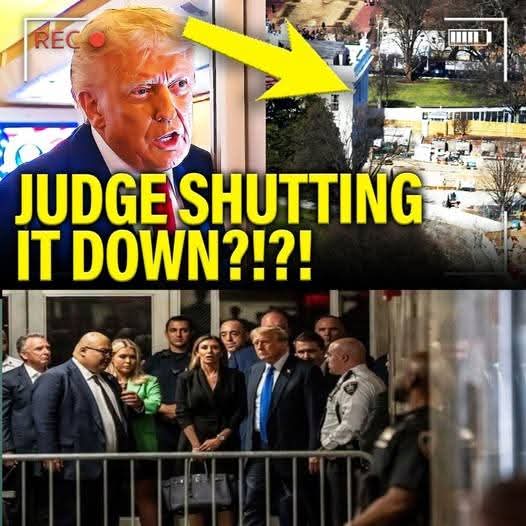
What began as a glittering display of excess is now unraveling into a constitutional showdown.
Donald Trump’s proposed massive “golden ballroom” at the White House—a project his allies once hyped as a symbol of power and prestige—has slammed into a wall of judicial resistance. In a tense, high-stakes hearing, U.S. District Judge Royce Lamberth signaled he may be prepared to halt construction entirely, stunning Trump’s team and throwing the project into chaos.
But this isn’t just about a building. It’s about power, secrecy, and the limits of presidential authority.
⚖️ Inside the Courtroom: A Judge Draws the Line
During the hearing, Judge Lamberth zeroed in on a series of red flags that left the courtroom buzzing:
No clear congressional authorization for a major structural addition to the White House complex
Unanswered questions about funding sources, including whether private or foreign-linked money was involved
A newly revealed underground bunker being constructed beneath the East Wing—without transparent approval or oversight
At one point, the judge reportedly questioned whether the project had “veered far beyond ceremonial renovation into national security alteration.” That distinction matters—because it changes who must approve it and how.
💰 The Money Mystery No One Can Explain
Perhaps the most explosive issue was where the money is coming from.
Court filings and testimony raised concerns that the ballroom’s funding trail is opaque at best. Federal law strictly regulates changes to the White House, especially when private donors are involved. If even a fraction of the funding bypassed congressional review—or came from sources not fully disclosed—the entire project could be deemed unlawful.
Judge Lamberth pressed Trump’s legal team for answers.
They didn’t have many.
🧱 The “Ballroom From Hell” — More Than a Nickname
Critics have dubbed it the “Ballroom From Hell” not just for its gilded design, but for what it represents:
A personalization of a public building
A potential circumvention of constitutional checks
And now, a possible abuse of executive power
What was pitched as a glamorous venue for state dinners is increasingly viewed as a symbol of overreach, raising alarms among historians, security experts, and lawmakers alike.
🕳️ The Bunker Revelation Changes Everything
The most jaw-dropping moment came when the court learned that an underground bunker was being added beneath the East Wing—a move with enormous national security implications.
Such construction typically requires multiple layers of approval, including congressional oversight and coordination with intelligence agencies. The lack of clarity on who authorized it—and why—sent shockwaves through the proceedings.
Legal experts say this revelation alone could be enough to freeze the project indefinitely.
⏳ What Happens Next?
Judge Lamberth has not yet issued a final ruling, but his tone made one thing clear: the project is in serious jeopardy.
Possible outcomes include:
An immediate injunction stopping all construction
A full investigation into funding sources
Congressional hearings into how the project was approved
Or a complete teardown of what’s already been built
For Trump, the fallout could extend far beyond a stalled ballroom—potentially reopening broader questions about transparency, accountability, and the use of presidential power.
🔥 Bottom Line
This is no longer a vanity project gone wrong.
It’s shaping up to be one of the most controversial White House construction battles in modern history—with a federal judge standing squarely in the way.
And if the court rules against Trump, the “golden ballroom” may go down not as a legacy—but as a warning.

JUST IN: Stephen Colbert Launches $750 Million Federal Lawsuit Against FCC and Donald Trump in Punitive and Compensatory Damages , Accusing Trump of Orchestrating Brazen Censorship and a Direct Assault on Press Freedom and Free Speech by Forcing CBS to Pull Interview with Texas Senate Hopeful James Talarico

UPDATE: Supreme Court Blocks President Donald Trump’s Proposal to Slash SSI and Veterans Benefits to Redirect Billions to DHS as Homeland Security Shutdown Deepens…. Full details ⤵️

““BEATEN, BEATEN — PAY NOW!” – Jason Kelce Sues Pete Hegseth and Network for $50 MILLION After Shocking On-Air Attack Read more⤵️
Epstein’s former accuser alleges the existence of recordings that she says could force Donald Trump to step down from office, a claim that has sparked renewed scrutiny and debate around Epstein’s network and its connections.
America has lost a titan in the struggle for civil rights and racial justice. From his days at the side of Dr. King, to his moral leadership in this century, Rev. Jesse Jackson, Sr. spent his life pushing our nation closer to its own ideal. As we pray for his family and loved ones, we should also mark his passing by recommitting ourselves to the vision of a fully free and just society.
🚨 CANADA LINES UP NEW FOOD BUYERS AS TRADE TENSIONS RISE 🌾🇨🇦🇺🇸 Amid renewed U.S. trade pressure, Canada has moved to diversify its agricultural exports — securing alternative international buyers and reducing exposure to potential disruption. Rather than waiting on negotiations, Ottawa accelerated outreach to global markets, a shift analysts say strengthens Canada’s leverage while stabilizing domestic producers. Investors are watching closely. Market strategists note that when food supply chains move, capital moves with them — and diversification tends to outlast political flare-ups. What began as a threat may now be speeding up a longer-term realignment in North American agriculture. Full story in comments 👇

REPORT: The Supreme Court Blocks Donald Trump’s Proposal to Slash SSI and Veterans Benefits to Redirect Billions to DHS as Homeland Security Shutdown Deepens⤵️

🚨 Trump Faces Public Humiliation as Court Orders Seizure of His Properties In a shocking legal development, Federal Judge Arthur Engoron has authorized the seizure of Donald Trump’s most prized properties, including Trump Tower, to satisfy a $464 million judgment. This unprecedented court order comes after Trump’s repeated refusal to post the required appeal bond. With the potential liquidation of his properties, including his iconic Manhattan real estate, the stakes for Trump’s business empire and political future have never been higher. In this video, we break down the legal implications, Trump’s defiant response, and how this massive legal setback could affect his 2024 campaign and legacy. 👉 Full story ⤵️

JUST IN: Taylor Swift’s Bold “No Kings” Message to Donald Trump on Presidents Day Sparks Nationwide Debate and Social Media Frenzy.

BREAKING: Kristi Noem’s Department of Homeland Security is on the brink of a department-wide shutdown as no spending package has been passed. Good, just shut it down!!

Recently, social media posts and popular online threads have claimed that an alleged victim associated with Jeffrey Epstein has come forward saying recordings exist of former U.S. President Donald Trump that would be so damaging they would force him to resign from office. These posts, including widely shared threads on Reddit, have circulated with high engagement and comments suggesting various theories about what such “tapes” might show — but they are unverified claims without confirmed sources or evidence from mainstream reporting or released legal documents. Official news reporting on the Epstein files — the vast trove of documents, photos, and videos recently being released by the U.S. Department of Justice — does confirm that the files contain references to Trump and his past relationship with Epstein, including emails and mentions in documents. However, the Justice Department itself has said that many sensationalist claims about Trump in these files are unfounded or unverified, and there has been no credible confirmation of explicit “tapes” of Trump that would compel resignation. Trump’s connections to Epstein during the 1990s and 2000s have been acknowledged in released correspondence, but nothing has been publicly verified that rises to the level of forcing a resignation. The discussions online about “tapes” are part of a broader mix of rumors, speculation, and politically charged narratives that frequently surface around both the Epstein case and Trump’s presidency. Without confirmation from respected news outlets or direct evidence from the released documents themselves, such claims should be treated as unverified and speculative, not established fact. As of now, major outlets continue reporting on the Epstein files with caution, distinguishing between documented content and unproven allegations circulating on forums and social platforms. #fblifestyle #EpsteinFiles #DonaldTrump
