
CELEBRITIES
JUST IN: Federal Judge Issues Sweeping Temporary Restraining Order Halting ICE Operations Nationwide, Ignoring Strong Rejection From Donald Trump Administration, Raising Legal and Political Tensions

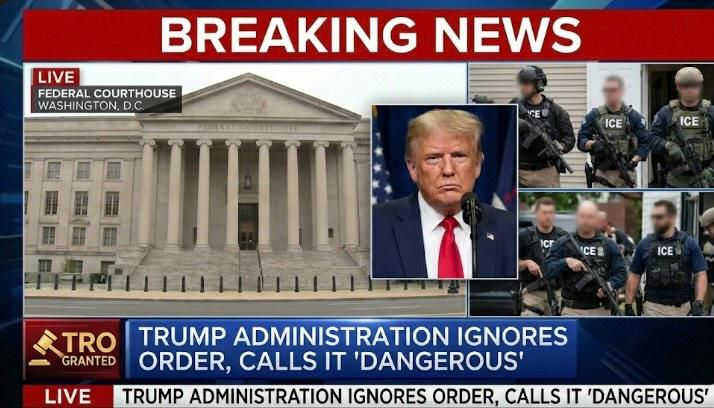
In a series of high-stakes legal battles across the United States, federal judges have increasingly intervened to limit or pause elements of Immigration and Customs Enforcement (ICE) and Department of Homeland Security (DHS) activities, intensifying legal and political confrontation with the Trump administration’s aggressive immigration enforcement strategy.
🧑⚖️ Federal Courts Step In with Targeted Restraining Orders
Several judges have issued temporary restraining orders (TROs) and preliminary injunctions that curtail specific actions by federal immigration agents:
In Portland, Oregon, a federal judge barred federal officers — including ICE and DHS agents — from using tear gas and projectile munitions against protesters and bystanders who do not pose an imminent threat, in response to allegations of excessive force at demonstrations near an ICE facility. The 14-day order emphasized constitutional protections for free speech and peaceful protest. �
First Amendment Watch
Also in Oregon, another federal judge ruled that immigration agents cannot make warrantless arrests unless there is a risk of escape, limiting sweeping “arrest first, justify later” practices heard in civil rights lawsuits. �
https://www.wtvy.com
These judicial interventions do not amount to a single nationwide halt of ICE operations, but they represent meaningful geographic and tactical limitations on how federal immigration enforcement may proceed.
⚖️ Major Courts Reject Broader Blocks to Enforcement
At the same time, federal courts have declined to issue sweeping nationwide injunctions that would halt broad immigration enforcement efforts:
In Minnesota, a federal judge denied a request to halt the Trump administration’s intensive immigration enforcement surge — known locally as “Operation Metro Surge” — despite widespread protests and legal challenges. Both state and local authorities argued the operation violated constitutional limits and community safety; however, the court ruled the plaintiffs hadn’t met the high bar for such emergency relief. �
New York Post
An appellate court in January also paused a lower court order limiting federal agents’ arrest and crowd-control powers in Minnesota while it considers further review. �
Reuters
🧨 Legal and Political Tensions Escalate
These judicial decisions come amid political firestorms and public protests over the scale and conduct of federal immigration enforcement:
The Trump administration’s unprecedented deployment of thousands of ICE, Customs and Border Protection (CBP), and other federal agents to cities like Minneapolis has drawn protests and litigation over alleged racial profiling, due process violations, and excessive force. �
AP News
Mayors and local officials in cities such as Chicago have sought to investigate or monitor federal immigration activity, citing concerns about constitutional rights and local authority, even as courts affirm federal supremacy in immigration. �
The Guardian
Immigration advocacy groups, including the American Civil Liberties Union (ACLU), continue to file lawsuits alleging unconstitutional enforcement practices ranging from warrantless arrests to retaliation against peaceful protesters. �
American Civil Liberties Union
📍 What This Means
While there is no single, confirmed nationwide TRO stopping all ICE operations at this time, the accumulation of regional court rulings signals intensifying judicial scrutiny of how federal immigration enforcement is carried out. At issue are core constitutional questions — including Fourth Amendment protections against unreasonable searches and seizures, due process rights, and the scope of executive authority in domestic enforcement.
These legal interventions — coupled with political pushback from cities, states, and civil rights groups — have amplified tensions between branches of government over immigration policy and executive power.

JUST IN: Federal Judge Issues Sweeping Temporary Restraining Order Halting ICE Operations Nationwide, Ignoring Strong Rejection From Donald Trump Administration, Raising Legal and Political Tensions

JUST IN: Amnesty International Submits Petition Seeking Possible Imprisonment and Asset Freezes for Elon Musk Over Alleged Foreign Election Interference, Also Calls for Donald Trump’s Impeachment and Arrest, Citing Allegations of War Crimes, ICE Brutality, Free Speech Abuse, and Epstein-Related Concern

JUST IN: Senate Passes SB 5855, Formally Barring Law Enforcement Officers From Wearing Face Coverings While on Duty despite Donald Trump’s Objection

BREAKING: Federal Judge Issues Sweeping Temporary Restraining Order Halting ICE Operations Nationwide, Ignoring Strong Rejection From Donald Trump Administration, Raising Legal and Political Tensions⤵️

JUST IN: USA Olympic Committee Accuses EU Authorities and Olympic Organizers of Failing to Provide Basic Athlete Support, Claims American Athletes Are Being Treated Unfairly Due to Rising EU–US Political Tensions amid Donald Trump’s Greenland ambitions

JUST IN; Former President Barack Obama Reportedly Files $500 million Lawsuit Against Donald Trump, Alleging Racial Intimidation and Severe Reputation Damage After he Posted AI-Generated Video depicting Barack & Michelle Obama as monkeys.

🚨 BREAKING: Donald Trump has just been rocked by what insiders are calling his worst poll result ever, as a once-reliable Texas Republican stronghold stuns the nation by flipping blue. The shock numbers have sent tremors through conservative circles and triggered open panic among Trump allies. For decades, this seat was considered untouchable—a symbol of red-state dominance. But the latest polling tells a very different story. Voters appear to be breaking sharply away, signaling frustration, fatigue, and a growing appetite for change that party leaders failed to anticipate. This isn’t just a bad poll—it’s a warning siren. Strategists are scrambling, donors are nervous, and the narrative of “safe red territory” is collapsing in real time. If Texas can wobble, nothing is guaranteed anymore. The political map is shifting fast—and the fallout is only just beginning. 👇👇

UPDATE: Amnesty International Submits Petition Seeking Possible Imprisonment and Asset Freezes for Elon Musk Over Alleged Foreign Election Interference, Also Calls for Donald Trump’s Impeachment and Arrest, Citing Allegations of War Crimes, ICE Brutality, Free Speech Abuse, and Epstein-Related Concern⤵️

🚨 JUST IN: TRUMP Taken by Surprise as 60 U.S. Senators Move to Block His Agenda at the Last Minute — Power Play Falters ⚡🏛️ Washington saw a sudden shift after a bipartisan group of 60 U.S. Senators acted late to block proposed legislation tied to TRUMP, catching allies off guard and reshaping the balance on Capitol Hill. Analysts say the move highlights growing resistance and weakening leverage, with signs of internal fractures as momentum appears to slow. More details below 👇

🚨Bill Clinton CALLS Trump’s BLUFF for PUBLIC HEARING on Epstein Former President Bill Clinton and former Secretary of State Hillary Clinton calling Trump’s bluff by agreeing to testify about the Epstein files and also demanding it takes place in public and Meiselas interviews Democratic Congressman Raja Krishnamoorthi about his response to this and more breaking news. 👉 Full story⤵️⤵️

🚨 JUST MINUTES AGO: A key moment from Jack Smith’s deposition may change everything about Trump’s role on January 6, 2021 riot at the U.S. Capitol. In what insiders are calling the most consequential exchange of the entire session, Smith lays out evidence pointing directly to Trump’s involvement during the Capitol riot. “He was receiving calls from people he trusted — people he relied on to help spark the riot — and still refused to act to protect the Capitol. That goes straight to criminal intent in our case. And that’s what I’m revealing now.” This single moment is already sending shockwaves through Washington. 👇👇 Watch all eight hours of Jack Smith’s closed-door deposition below.
