
CELEBRITIES
JIMMY KIMMEL BROKE DOWN ON AIR OVER THE SHOOTING OF ALEX PRETTI — “DECIDE FOR YOURSELF IF THAT’S MAKING AMERICA GREAT.” During an emotional moment that stunned viewers, Jimmy Kimmel visibly struggled to hold back tears as he addressed the killing of Alex Pretti, abandoning monologue polish for raw disbelief and grief. Speaking slowly and deliberately, Kimmel laid out the known facts of the case before pausing, his voice cracking as he challenged viewers not with a punchline but with a moral reckoning, asking them to sit with what happened and decide what it says about the country. The moment wasn’t fiery or performative — it was heavy, restrained, and deeply personal, as Kimmel admitted he couldn’t make sense of how such a death could be framed, defended, or explained away. For many watching, the silence between his words said as much as the words themselves, turning a late-night segment into a quiet indictment that lingered long after the cameras cut away…. See more below👇👇

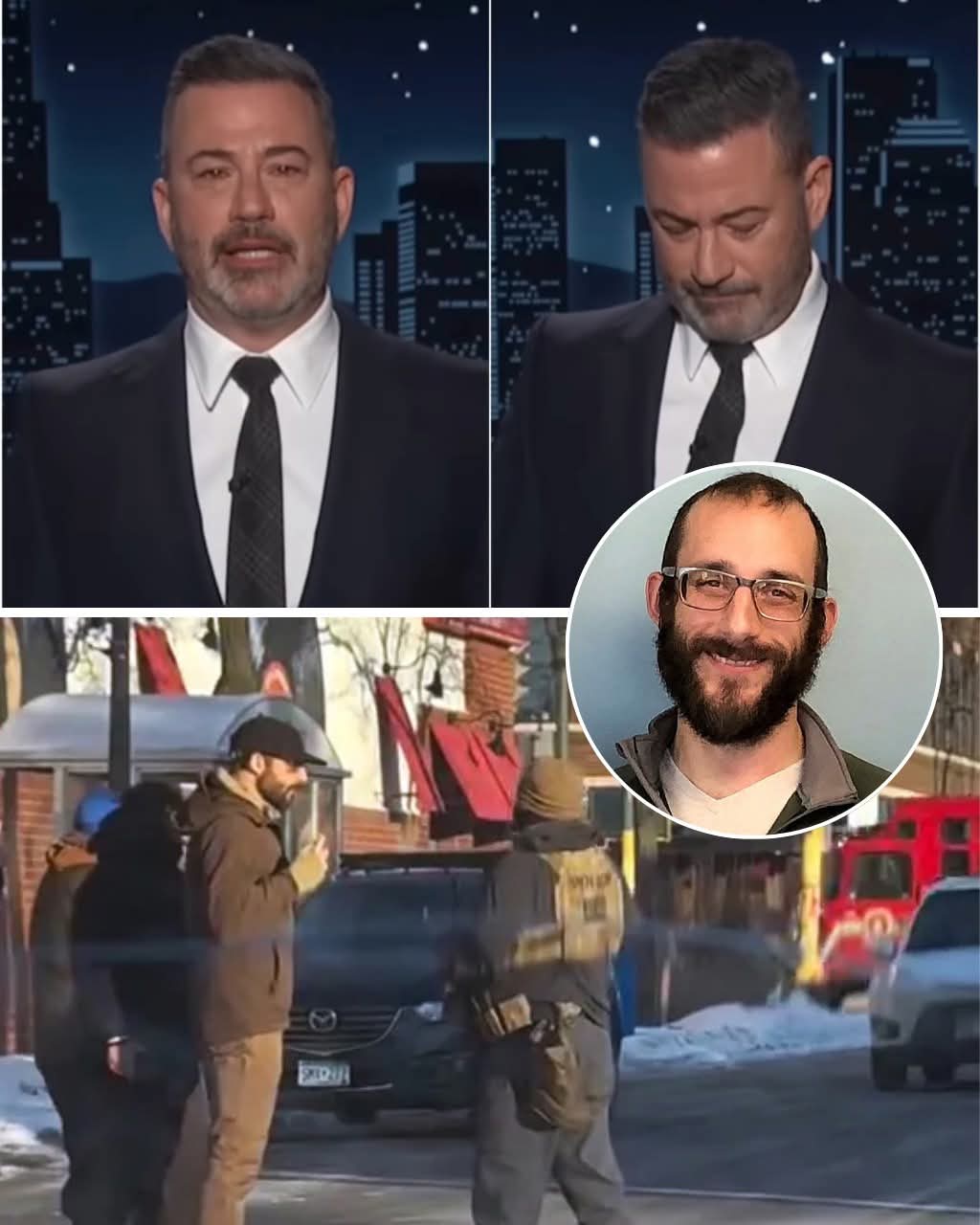
Late-night television rarely stops the room. It jokes, it deflects, it moves on. But on this night, Jimmy Kimmel didn’t.
As cameras rolled, Kimmel abandoned the rhythm of a monologue and stood visibly shaken, struggling to keep his composure as he addressed the killing of Alex Pretti. There were no punchlines, no cues for laughter—just long pauses, a cracking voice, and a host who clearly didn’t know how to make sense of what he was saying out loud.
Speaking slowly and carefully, Kimmel laid out what has been publicly reported about the case, choosing his words with restraint rather than outrage. Then he stopped. The silence stretched. When he continued, his voice faltered—not from anger, but from disbelief.
“This is where we are,” he said, challenging viewers not with an opinion, but with a question: Decide for yourself if that’s making America great.
It wasn’t a speech. It wasn’t a rant. It was something rarer—and harder to watch. Kimmel admitted he couldn’t understand how a death like this could be minimized, rationalized, or folded into talking points. He didn’t tell the audience what to think. He asked them to sit with it.
For many watching at home, it was the quiet that landed hardest. The spaces between his words carried grief, exhaustion, and a sense that the country has become numb to tragedies that should still shock us to our core.
In a medium built on noise, Jimmy Kimmel chose stillness. And in doing so, he turned a late-night segment into a moment of collective reckoning—one that lingered long after the applause lights stayed dark and the cameras cut away.

JIMMY KIMMEL BROKE DOWN ON AIR OVER THE SHOOTING OF ALEX PRETTI — “DECIDE FOR YOURSELF IF THAT’S MAKING AMERICA GREAT.” During an emotional moment that stunned viewers, Jimmy Kimmel visibly struggled to hold back tears as he addressed the killing of Alex Pretti, abandoning monologue polish for raw disbelief and grief. Speaking slowly and deliberately, Kimmel laid out the known facts of the case before pausing, his voice cracking as he challenged viewers not with a punchline but with a moral reckoning, asking them to sit with what happened and decide what it says about the country. The moment wasn’t fiery or performative — it was heavy, restrained, and deeply personal, as Kimmel admitted he couldn’t make sense of how such a death could be framed, defended, or explained away. For many watching, the silence between his words said as much as the words themselves, turning a late-night segment into a quiet indictment that lingered long after the cameras cut away…. See more below👇👇

💥 COURTROOM COLLAPSE: HE BREAKS DOWN IN TEARS AS JUDGE THUNDERS “GUILTY ON ALL COUNTS” — JACK SMITH’S POLITICAL BOMBSHELL IGNITES FURY AND SPECULATION?

BREAKING NEWS: JACK SMITH JUST LOOKED THE MAGA REPUBLICS IN THE EYE AND DECLARED HE WILL NEVER BE INTIMIDATED BY TRUMP OR HIS THREATS…. Full details ⤵️

💥 DEFIANT FACE-OFF: JACK SMITH LOCKS EYES WITH MAGA REPS, DECLARES ZERO INTIMIDATION FROM TRUMP’S RELENTLESS THREATS — GOP’S AMBUSH TURNS INTO TOTAL CHAOS? ⚡ In a shocking turn that’s ripping through Washington corridors, a routine hearing detonated into an all-out political inferno, catching everyone off guard with revelations of unseen pressures. Reportedly, the Special Counsel held firm amid a barrage of heated accusations and social media onslaughts tallying in the hundreds, insiders claim, as Republican fireworks fizzled spectacularly—exploding online with viral clips and divided reactions trending across platforms while fans can’t believe the stunning reversals involving key events from that fateful day. The fallout is intensifying with whispers of blame-shifting and narrative flips; the internet can’t stop talking about this bombshell showdown—watch the highlights before they’re drowned out in the spin!

GOOD NEWS 🔴 Connor McDavid has announced that his wife, Lauren Kyle, is overjoyed and excited to welcome a new baby into their family. He shared the baby’s name and gender with fans, sparking a wave of congratulations and warm wishes from supporters around the world. 💙👶✨ WATCH MORE⤵️

BORDER WAR ERUPTS: FURIOUS CANADA PUTS DAGGER IN TRUMP AND HITS HIM HARD — ALLIANCE SHATTERED WITH BRUTAL TRADE COUNTERSTRIKE?

🔥 T.R.U.M.P CABINET IN TOTAL BLOODBATH — INSIDERS TURN, LOYALTY SHATTERS 🔥 Washington is exploding as reports claim T.r.u.m.p’s inner circle is imploding, with key cabinet figures allegedly turning against him in a stunning betrayal. What was once a united front is now open warfare, as insiders scramble to protect themselves amid mounting investigations and political fallout. Sources describe chaos behind closed doors, fractured alliances, and panic spreading through T.r.u.m.p.’s camp. Allies are denying everything, critics are piling on, and the fallout is accelerating fast. If these cracks keep widening, this internal collapse could become one of the most devastating blows yet to Trump’s political future. 💥⚖️ 👇 See all below in the comments.

🚨MUST SEE: Gun Laws Have Changed. Claim your free Gun Map Guide ⤵️

YOU DEFAMED ME ON LIVE TV — NOW PAY THE PRICE!” — Connor McDavid Drops $50 MILLION Legal Bomb on The View and Sunny Hostin After Explosive….Full details ⤵️ On-Air Ambush

💥 BREAKING: 20 MINUTES AGO — BREAKING on MS NOW: Jack Smith Unveils UNDENIABLE Evidence, and T.r.u.m.p’s Lawyers Are in a PANIC. ⚡ Walking into a Republican-controlled House Judiciary Committee, Jack Smith calmly shattered the “witch hunt” narrative and put everything on the record. In his opening statement, Smith declared: “Our investigation developed proof beyond a reasonable doubt that President T.r.u.m.p engaged in a criminal scheme to overturn the results of the 2020 presidential election and to prevent the lawful transfer of power.” Smith told lawmakers that T.r.u.m.p broke the law, attempted to overturn the election, and would do so again if given the chance…..Full details ⤵️

🚨 JUST NOW: TRUMP IMPEACHMENT 3.0 EXPLODES: 212 LAWMAKERS SIGN RESOLUTION — Shocking Twists Ahead as Chaos Erupts & Secrets Threaten to Unravel Everything! 💥 In a shocking turn of events, Donald Trump’s third impeachment has detonated like a Hollywood blockbuster bomb, with 212 lawmakers signing a blistering resolution accusing him of abuse of power and election meddling. What started as hushed Capitol whispers has erupted into a full-scale congressional war, fueled by explosive evidence reportedly linking the president to shadowy backroom deals that could topple his empire. Insiders claim the resolution was rushed after leaked memos from White House aides revealed desperate attempts to quash probes, leaving Trump fuming at Mar-a-Lago and blasting it as a “rigged betrayal” on Truth Social. Fans can’t believe the betrayal as 47 Republicans break ranks, while the public splits in fury—trending across platforms like X and TikTok with memes and heated debates exploding online. The internet can’t stop talking about this viral impeachment thriller—dive into the full resolution before shocking secrets get buried forever!⤵️
